r/DIYSnuff • u/Snusalskare • 9m ago
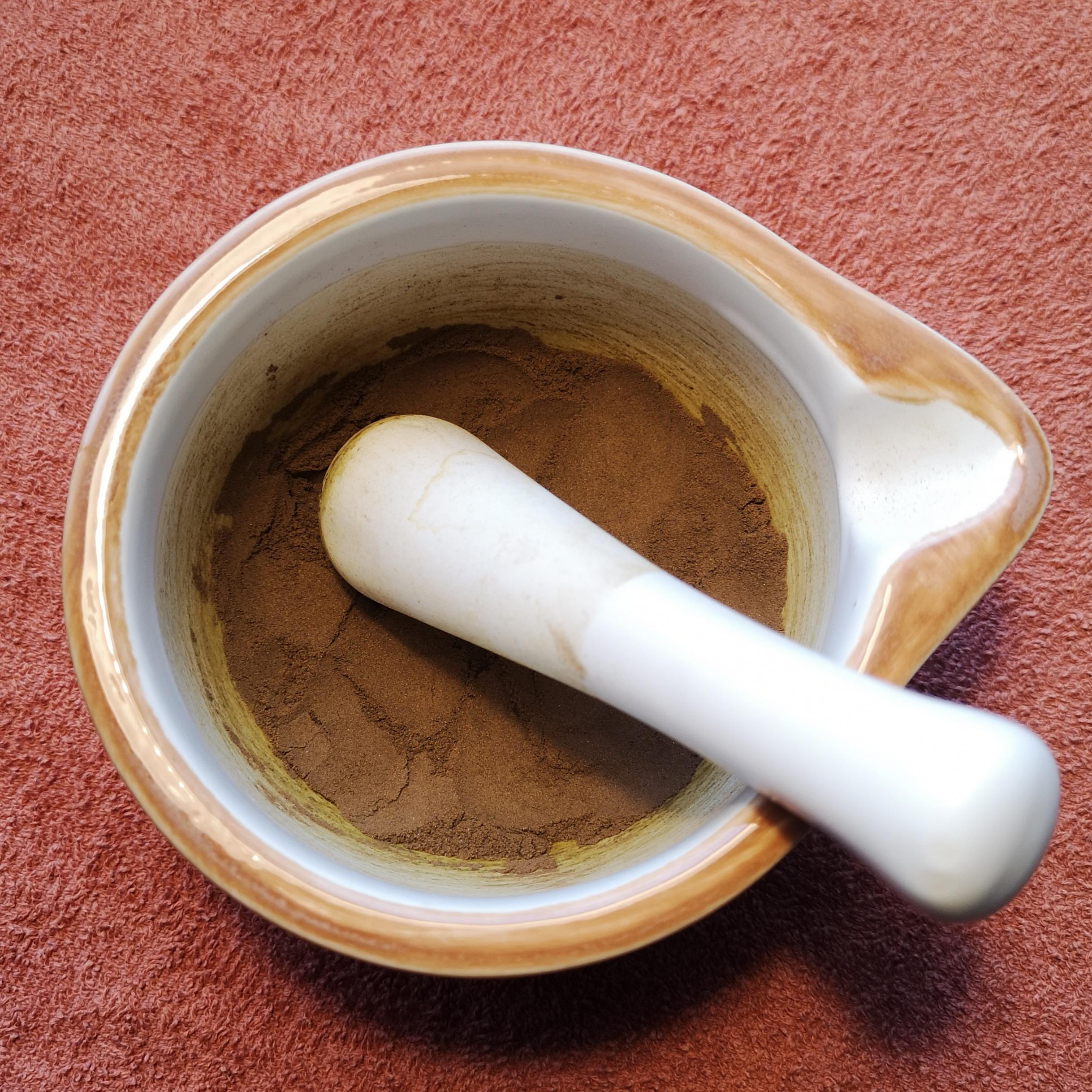
Tobacco Flower as Flour NSFW

For anyone who happens to grow their own tobacco, don't forget about saving the dried spent flowers. Makes for a surprisingly potent snuff. Here we have a small test batch of dried Hasankeyf flowers (an n. rustica variety), which is shockingly strong fairly finely ground with mortar and pestle and taken fresh, completely unalkalized. A few small pinches and I'm still feeling it 10 minutes later.
So, if you happen to be seed saving from a particular plant (or if one just escapes notice and goes to flower) be sure to pluck off and and save the spent flowers before they detach from their seed pods.
I also saved a small amount of flower from two of the n. tabacum varieties I grew out this past season (Corojo 99 and Djebel 174), which have since been pressed into a plug and tucked away to age a bit.
Flowers! Who knew.
r/DIYSnuff • u/Snusalskare • Jun 25 '26
New Sieve Set NSFW

Finally broke down and upgraded my cheap, small, plastic framed sieve set to something more substantial for dry and moist snuff making. Went with 20cm size, 304/430 stainless in 900μm, 600μm, 300μm, 150μm, and 75μm screen sizes (US mesh 20, 30, 60, 100, and 200). The finest one is more for sifting out ultra fines from whatever passes the 100 mesh than anything (and maybe making up some White Elephant-style snuff too!) . Also got a matching shake pan and lid. Dropped a bit over a hundo on the lot; going to be trying them out with 150g of mixed stem from last season's grow in a minute...
UPDATE: should one ever happen to purchase such lower tier lab sieves, don't be like me. Clean and wash them very thoroughly first. I used them straight out of the box. Bad idea. I ground and sieved the whole 150g of stem. Quick and easy work, really. However, my trusty neodymium fishing magnet immediately alerted me to a big problem: lots of tiny bits of metal shavings/flakes/filings and even some fragments of the wire mesh in every bowl separated out from the sieving. (I always test all snuffs or prepared flour for ferrous particles as a matter of course). The shiny, metallic contaminants were easily visually confirmed with a 40x jeweler's loupe and some strong light. What a waste! 150g of ground homegrown stem not even fit to go into the compost pile. Entirely my fault (buying cheap products and then not cleaning/washing properly before putting into service), but still frustrating. I have since scrubbed the sieves thoroughly, but am going to be running them through the dishwasher at least twice for good measure. Then, I'll test on some less precious tobacco. Lesson learned, I guess...
r/DIYSnuff • u/Bolongaro • Jun 17 '26
Jackpot! NSFW

15.7 g pure tobacco* - pretty solid for a €2.50 Dominican robusto. The weight of these hand-made stogies varies rather widely in the range from just under 10 g to almost 16 g, averaging around 12.5 g a stick. Scoring a fatty like this in a bundle always cheers me up.
*water content - about 7%
r/DIYSnuff • u/cheyyne • May 25 '26
Another leaf check - Burley, leaf has large, dark blotches patched with light powdery deposits NSFW

Last time I was just seeing uncured spots. A lot of my bulk leaves look like this too. They have extra-withered areas, these areas are universally dry and have very dark blotches with patches of powder. Is it mold or mildew? Maybe just really dry?
Safe to snoot? Or into the bin?
r/DIYSnuff • u/cheyyne • Apr 19 '26
Burley leaf from LeafOnly has a lot of these discolored spots. Probably fine though? NSFW

I found a lot of the Organic Burley from LeafOnly has these little spots on them. The Virginia Brightleaf I ground up in the last batch had some similar spots but not as many.
They aren't fuzzy like mold. Dragging my nail across them, the spots sometimes feel like the surrounding lamina or sometimes feel a little dryer.
My guess is that maybe the curing was a little inconsistent on these leaves but they are probably fine for grinding up. Nevertheless, I figured I'd ask more experienced minds what they think.
r/DIYSnuff • u/Snusalskare • Mar 28 '26
Unexpected Snuff Ingredient Find NSFW

Found myself doing some weekend grocery shopping at a new international market which recently opened up nearby, and came across this little find. First time coming across sodium carbonate in such a retail setting. Country of manufacture was Jordan. Did not buy it since I'm perfectly happy cooking up my own at home, but an interesting thing to stumble upon nonetheless...
r/DIYSnuff • u/CherryElectrical9581 • Feb 02 '26
2 homemade snuff NSFW
The lighter one is pure virginia- 69.9% tobacco flour, 5.82% carbonate, 4.83% salt, 19.4% water, keep in mind this is a 10g batch made with a 0.1 g scale, so the precision is dubious
The darker is a regional variety from Brasil called Fumo de Corda Caiçara- very strong almost like a fermented burley-, 65,3% tobacco, 3.84 carbonate, 3,84 salt, 27% water and just a tiny bit of clarified butter.
I’ve made them recently using a mortar and pestle, without a proper granulated mesh sieve, but the strength is a bit low, any pointer?

r/DIYSnuff • u/Bolongaro • Aug 15 '25
Quick and easy recipe for extra strong fine dry snuff NSFW
r/DIYSnuff • u/Bolongaro • May 30 '25
Busting some myths NSFW

This bit from someone's post (made today on Fb Modern Snuff group) features some most often recurring myths / misconceptions about snuff making.
I will paste my reply in the comments.
For a side note. You did notice someone trying to make homemade a trend, didn't you? It's not our mission.
r/DIYSnuff • u/JackVoltrades • May 29 '25
The salts in snuff {stub} NSFW
(a work in progress, a draft, but I thought I would put it here as an outline, feedback welcome)
The Chemistry of DIY Snuff: The Role of Mineral Salts and Alkalisers
While plain tobacco powder with varying moisture levels can be and is often used alone as nasal snuff, most traditional and modern recipes employ and benefit from the inclusion of one or more mineral additives.
In this discussion, we use the term salt in it's strict chemical sense: an ionic compound composed of positively charged cations and negatively charged anions. What we sprinkle on our food, commonly called “table salt”, (NaCl), is made of a single positively charged Sodium cation (Na⁺) and a single negatively charged Chlorine anion (Cl⁻).
Beyond table salt, a variety of specialized mineral salts and bases are used in the culinary arts, agriculture, pharmacology, chemistry, and more. In snuff production, these additives serve three primary, interconnected functions:
- pH Regulation (Nicotine Bioavailability)
- Sensory Manipulation (Taste, Texture, Scent, and Nasal Burn or Bite)
- Preservation (Moisture Stability and Mold Prevention)
DIY Snuff Ingredient Reference Table
The salts most commonly used in the production of snuff are:
| IUPAC name | chemical formula | CAS # | E# | common names |
|---|---|---|---|---|
| ammonium carbonate | (NH₄)₂CO₃ | 506-87-6 | E503(i) | baker's ammonia, smelling salts, hartshorn salt, sal volatile |
| ammonium chloride | NH₄Cl | 12125-02-9 | E510 | sal ammoniac, salmiak, nausadar |
| calcium carbonate | CaCO₃ | 471-34-1 | E170 | chalk, limestone, whiting, garden lime |
| calcium hydroxide | Ca(OH)₂ | 1305-62-0 | E526 | pickling lime, slaked lime, hydrated lime, cal, chuna (paste), limewater (saturated aqueous solution) |
| potassium bitartrate (aka. potassium hydrogen tartrate) | KC₄H₅O₆ | 868-14-4 | E336 | cream of tartar, beeswing, argol, winestone |
| potassium carbonate | K₂CO₃ | 584-08-7 | E501(i) | potash, pearl ash, salt of tartar, salt of wormwood dipotassium carbonate |
| sodium bicarbonate (aka. sodium hydrogen carbonate) | NaHCO₃ | 144-55-8 | E500(ii) | baking soda, bicarbonate of soda, bicarb, natron |
| sodium carbonate anhydrous | Na₂CO₃ | 497-19-8 | E500(i) | soda ash, calcined soda |
| sodium chloride | Na₂Cl | 7647-14-5 | E470 | salt, table salt, common salt, sea salt, kosher salt |
[note] As Snuff is a product we put into our body, it is essential that the salts we include in our recipes are of “food grade” quality. “Food grade” is a term that denotes a product is verified to be of a certain level of purity and usually that the small percentage of contaminants present are non-toxic in nature. Each country’s regulating body has a different definition of “food grade” and this warrants further investigation by the consumer, but as a takeaway, “food grade” quality is what we are after. [insert references to definitions: USA, EU, etc,]
WARNING: Strong alkalizers like pure sodium carbonate and calcium hydroxide are highly caustic in their raw states. Direct contact can cause severe skin and eye burns. When working with these ingredients, always wear eye protection and gloves. Furthermore, excessive alkalinity can damage your nasal lining. Never exceed a total raw alkalizer mass of (x%) of your dry tobacco weight without precise, calibrated pH testing tools.
1. pH Regulation and Nicotine Delivery
The pH of a solution is a measure of the acidic or basic (alkaline) nature of that solution. pH is a logarithmic scale from 0 to 14, where pH7 is neutral, less than pH7 is acidic, and greater than pH7 is basic, or alkaline. (insert relatable examples: foods, chemicals, etc.)
The primary reason snuff makers manipulate pH is to control the physical state and absorption speed of the nicotine molecule.
In the tobacco leaf, nicotine naturally exists in two distinct molecular states: protonated (bound as an acid salt) and unprotonated (free-base). While both forms are water-soluble, only the unprotonated free-base form can readily cross lipid cell membranes. This means that for nicotine to be rapidly absorbed through your nasal or oral mucosa into the bloodstream, the environment must be alkaline.
Nicotine has a chemical dissociation constant (pKₐ) of 8.0. This chemical baseline creates a precise mathematical curve of nicotine availability based on the final pH of your snuff:
| Environmental pH | **Unprotonated (Free-Base) Nicotine % | Nasal Sensation and Nicotine Delivery Profile** |
|---|---|---|
| 6.0 | ~1.0% | * |
| 7.0 | ~9.1% | * |
| 8.0 | ~50% | * |
| 9.0 | ~90.9% | * |
| 10.0 | ~99.0% | * |
The proportion of protonated and unprotonated nicotine within any given leaf material depends on the pH of the environment. By adjusting the type and quantity of alkalizing agents, the recipe builder can safely engineer a snuff to hit a targeted nicotine profile.
To be chemically precise, the nicotine molecule two seperate basic nitrogen atoms, meaning it can be protonated twice depending on how acidic the environment becomes.
The following figures illustrate the percentages of unprotonated nicotine in various pH environments:


2. Functional Categories of Snuff Salts
Every salt or base alters the tobacco matrix differently based on its individual solubility, pH ceiling, and chemical behavior.
Category A: The Strong Alkalizers (High Bioavailability)
Sodium Carbonate Anhydrous (Na₂CO₃): The gold standard for modern snuff building. It is highly water soluble and readily available. It yields a sharp, immediate free-base conversion and gives off a clean, classic alkaline scent profile.
Sodium Carbonate Decahydrate (Na₂CO₃·10H₂O)$$ Commonly know as washing soda crystals, this hydrated form of sodium carbonate is especially useful for use in dry or water-free recipes. It's flaky, delicate chrystalline structure crushes beautifully, allowing it to easily blend and homogenize into dry tobacco flour requiring water as a mixing vehicle. because sodium carbonate decahydrate contains water molecules trapped inside it's chrystal matrix, it weighs significantly more. To achieve the same alkalizing affect as 1.0 grams of sodium carbonate anhydrous, use **2.70 grams of the decahydrate
Potassium Carbonate (K₂CO₃): Highly soluble but requires 1.30 grams to match the chemical neutralizing capacity of 1.0 gram of anhydrous sodium carbonate. It delivers a slightly softer chemical burn, while maintaining excellent nicotine availability.
Calcium Hydroxide (Ca(OH)₂): A powerful strong base. Because it provides two hydroxide equivalents at a lower molecular weight, only 0.70 grams is required to match 1.0 gram of sodium carbonate. However, it is poorly soluble in water. The majority sits in the snuff as an undissolved solid or paste, acting as a slow-release engine that continually maintains a peak pH ceiling of x over months of aging.
Category B: The Auto-Regulating Buffers (Safety & Stability)
Sodium Bicarbonate (NaHCO₃): Baking soda is an amphoteric buffer with a natural, fixed pH ceiling of 8.3. If mixed into acidic raw tobacco, it gently raises the pH to its 8.3 baseline, safely free-basing roughly 60% of the nicotine. If added to a recipe over-saturated with strong sodium carbonate, it behaves as an acid, pulling the dangerous pH down toward 8.3. It is completely foolproof for daily-driver recipes.
Calcium Carbonate (CaCO₃): Pure chalk is practically insoluble in water. It establishes a mild, perfectly safe alkaline baseline near 9.4, but because it cannot fully dissolve, it acts as a "dead-end" buffer. It will neutralize aggressive organic acids in the leaf without any risk of over-alkalizing or burning your nose.
Category C: Sensory & Flavor Modifiers
Sodium Chloride (NaCl): Standard table salt is completely pH-neutral (pH 7.0) and does not affect nicotine delivery. However, it neurologically suppresses the natural, harsh chemical bitterness of raw tobacco and nicotine, allowing aromas to step forward. It also draws subtle moisture to the nasal lining via osmosis, preventing fine powder from slipping into the throat. Standard use is **x% to y%**of dry weight.
Ammonium Chloride (NH₄Cl): This salt is mildly acidic (pH 4.6–6.0) and provides a sharp, metallic, deeply savory mineral sting (Salmiak). It absorbs heat as it dissolves, introducing a distinct, refreshing cooling sensation in the nose without using mint oils.
Total-System Dynamics: The Sodium-Nicotine Counter-Ion Effect While individual salts are categorized by their primary roles (such as flavor or pH manipulation), makers must consider the collective impact of sodium ions (Na+) across the entire recipe. whether introduced via a neutral salt (sodium chloride), a strong alkalizer (sodium carbonate), or a buffer (sodium bicarbonate), the cumulative presence of sodium drives a powerful pharmokinetic phenomenon in the nose. When a concentrated pool of sodium ions lands on the nasal mucosa, it temporarily shifts local osmoic pressure across tissue membranes. this rapid fluid shift subtly opens the tight cellular junctions in the epithelial lining. Effectively, this carves a wide physical pathway that allows free-base nicotine to pass into the bloodstream significantly faster than it would in a sodium-free formulation. Consequently, recipes utilizing a combination of sodium-based flavoring and alkalizing salts will deliver a faster, perhaps more perceptible nicotine hit than those utilizing potassium-based alternatives.
Category D: Highly Volatile & Specialized Additives
Ammonium Carbonate ((NH₄)₂CO₃): This salt is structurally unstable at room temperature. It spontaneously decomposes entirely into pure ammonia gas, carbon dioxide, and water vapor. This gas matrix inflates and aerates wet tobacco flour to keep it fluffy, while the escaping ammonia gas floods the nose with an intense, sinus-clearing "ammonia tickle" and rapid nicotine delivery. Must be stored in strictly airtight glass.
Potassium Bitartrate (KC₄H₅O₆): A mild acid salt (pH 3.5), historic blenders used trace amounts during long, multi-stage fermentations. It acts as an acidic brake, binding to runaway, foul-smelling free ammonia gases and converting them into stable, odorless ammonium tartrate to protect delicate floral or fruit toppings from being bleached out.
Wood Ash: The historic predecessor to purified salts (used in indigenous snuffs like Nunu or Rappee). Hardwood ash is a crude, highly effective alkalizing mixture of primarily calcium carbonate and smaller fractions of potassium and magnesium carbonates and oxides. Depending on the species of wood material, growing conditions and location, wood ash will contain a wide array of other minerals in trace amounts, potentially including silica, aluminum, iron, phosphorus, manganese, sodium, trace micronutrients and heavy metals. It provides a robust alkaline environment.
3. Preservation, Moisture, and Texturing
When working with traditional moist or medium-moist snuffs, mineral additions pull double duty as structural stabilizers.
Mold Prevention & Water Activity
High moisture combined with finely ground organic plant matter is an open invitation for mold spores and bacterial rot.
Sodium Chloride and Ammonium Chloride preserve your batch by lowering its "water activity." They lock up free water molecules, making the moisture completely unavailable to microbes, ensuring a shelf life of years inside a sealed tin.
Texturizing and Anti-Caking
Fine tobacco grinds have a tendency to aggregate into dense, sticky cakes when wet.
Suspending an insoluble mineral like Calcium Carbonate (Chalk) at a rate of 2-5% solves this mechanically. The microscopic particles coat the sticky tobacco fibers, keeping the final grind velvety, free-flowing, and exceptionally easy to pinch or take cleanly without clotting.
end of document.
possible things to yet to be included:
[notes and references to pH measurement]
[guidelines for individual salt additions]
[commercial examples]
[solubility discussion and data, insert table]
[insert table on saturated salt solution’s pH]
[relative strength of alkalizing salts, insert tables]
Taste and Physical Sensation
tasting notes (- gonna need some help here, team)
(References to some common commercial products for context?)
Preservation
Stability/degradation
Notes and discussion on fermentation, ageing, and yet undiscussed factors